
- Chronology
- Before 1500 BCE
- 1500 BCE to 500 BCE
- 500 BCE to 500 CE
- Sixth to Tenth Century
- Eleventh to Fourteenth Century
- Fifteenth Century
- Sixteenth Century
- Seventeenth Century
- Eighteenth Century
- Nineteenth Century
- Twentieth Century
- Twenty-first Century
- Geographic Area
- Africa
- Caribbean
- Central America
- Central and North Asia
- East Asia
- North America
- Northern Europe
- Oceania/Australia
- South America
- South Asia/South East Asia
- Southern Europe and Mediterranean
- West Asia
- Subject, Genre, Media, Artistic Practice
- Aesthetics
- African American/African Diaspora
- Ancient Egyptian/Near Eastern Art
- Ancient Greek/Roman Art
- Architectural History/Urbanism/Historic Preservation
- Art Education/Pedagogy/Art Therapy
- Art of the Ancient Americas
- Artistic Practice/Creativity
- Asian American/Asian Diaspora
- Ceramics/Metals/Fiber Arts/Glass
- Colonial and Modern Latin America
- Comparative
- Conceptual Art
- Decorative Arts
- Design History
- Digital Media/New Media/Web-Based Media
- Digital Scholarship/History
- Drawings/Prints/Work on Paper/Artistc Practice
- Fiber Arts and Textiles
- Film/Video/Animation
- Folk Art/Vernacular Art
- Genders/Sexualities/Feminisms
- Graphic/Industrial/Object Design
- Indigenous Peoples
- Installation/Environmental Art
- Islamic Art
- Latinx
- Material Culture
- Multimedia/Intermedia
- Museum Practice/Museum Studies/Curatorial Studies/Arts Administration
- Native American/First Nations
- Painting
- Patronage, Art Collecting
- Performance Art/Performance Studies/Public Practice
- Photography
- Politics/Economics
- Queer/Gay Art
- Race/Ethnicity
- Religion/Cosmology/Spirituality
- Sculpture
- Sound Art
- Survey
- Theory/Historiography/Methodology
- Visual Studies
Browse Recent Book Reviews
Irene V. Small
Princeton, NJ:
Princeton University Press, 2024.
448 pp.;
237 color ills.
Hardcover
$42.00
(9781890951993)
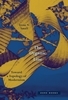
The Organic Line: Toward a Topology of Modernism, by Irene V. Small, has the ambition and potential to become a classic. Its starting point is the inflection forged by the work of Lygia Clark on the history of modernism, and its guiding thread is the discovery of the “organic line” in the mid-1950s. This line, which appears wherever two monochromatic planes juxtaposed on the same surface meet, transforms void into breath. Its discovery opened a whole realm of artistic possibilities, which Clark unfolded in her extensive experimentations. What this book explores are the countless reverberations of this organic line. …
Full Review
March 12, 2025
Kency Cornejo
Durham:
Duke University Press, 2024.
304 pp.;
91 color ills.
Paperback
$28.95
(9781478030546 )
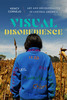
In Visual Disobedience: Art and Decoloniality in Central America, Kency Cornejo surveys contemporary political art in Central American countries. The book includes analyses of forty artists and more than eighty works, underscoring the abundance and diversity of artistic experimentation in the region. The author reads these pieces through her concept of “visual disobedience,” a decolonial mode of resistance that posits art as a direct intervention in a specific sociopolitical reality. For Cornejo, these works embody a sensorial practice where the tactile, auditory, and visual coexist and are fundamentally motivated by love for the “damnés,”—the condemned, as put…
Full Review
March 10, 2025
Isabelle Tillerot
Trans Chris Miller
Getty Museum Store, 2024.
272 pp.;
46 color ills.;
101 b/w ills.
Paperback
$70.00
(9781606067970)
The intriguing title of Isabelle Tillerot’s monograph both piques curiosity and encapsulates the thesis that its text develops in detail. Deploying astute observations and subtle insight, this study follows the evolution of room decoration in seventeenth and eighteenth-century European, principally French royal and aristocratic dwellings. Its focus is on the close relationship between the ornamental designs of these spaces and the paintings embedded within them, projects that required the joint efforts of artists and artisans of varied specializations and status. Ultimately it asserts that the full flowering of rocaille—the author rejects the nineteenth-century term “rococo”—decor coincides with the adoption of…
Full Review
March 5, 2025
Chang Tan
Ithaca, NY:
Cornell University Press, 2024.
224 pp.;
28 color ills.;
29 b/w ills.
Hardcover
$46.95
(9781501773181)
Jennifer Dorothy Lee
1st edition .
Oakland, CA:
University of California Press, 2024.
208 pp.;
31 color ills.
Hardcover
$85.00
(9780520393783)
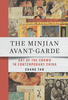
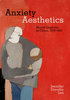
Joining a growing number of publications that have sought to reexamine China’s socialist legacy, two new books examine the ways in which contemporary art practice and discourse reengaged the social and political commitments of the Maoist period (1949–76). Jennifer Lee’s Anxiety Aesthetics: Maoist Legacies in China, 1978–1985 focuses on the roughly eight years immediately following the end of the Cultural Revolution (1966–76) to examine how artists and intellectuals reconfigured socialist aesthetics for the post-Mao era. In The Minjian Avant-Garde: Art of the Crowd in Contemporary China, Chang Tan looks to a later moment in the 1990s and early 2000s…
Full Review
March 3, 2025
Michele Matteini
Seattle:
University of Washington Press, 2023.
248 pp.;
68 color ills.;
27 b/w ills.
Hardcover
$65.00
(9780295750958)
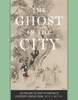
Michele Matteini’s The Ghost in the City: Luo Ping and the Craft of Painting in Eighteenth-Century China offers insight on the eighteenth-century artist Luo Ping’s (1733–1799) position in the history of painting in China and sheds light on the intricate relationship between artist and patron. Known as one of the “Eight Eccentrics of Yangzhou,” Luo is primarily recognized for his unusual paintings of ghosts and his activities in the commercial city of Yangzhou. Luo Ping was introduced to audiences in Europe and the US through a 2009 exhibition that traveled between Museum Rietberg and the Metropolitan Museum of Art, and…
Full Review
February 26, 2025
Arisa Yamaguchi
1st Edition.
Routledge, 2023.
184 pp.;
20 color ills.;
47 b/w ills.
Hardcover
$152.00
(9781032368719)
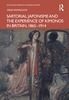
Sartorial Japonisme and the Experience of Kimonos in Britain, 1865—1914, explores the experience of kimono in Victorian and Edwardian Britain. Through the medium of painting, theatre, performance, dress, department stores, postcards, and drag, it examines the design, construction, dissemination, and reception of kimono as garments situated as a sartorial medium in the critical discourse of Japonisme. Approaching kimono as a unique space of transformation, the book includes the everyday experiences of kimono in Britain and of those people and spaces previously ignored or overlooked. Researched and written by Arisa Yamaguchi, assistant professor at the University of Tsukuba, it draws…
Full Review
February 5, 2025
Mark William Hauser and Julia Jong Haines, eds.
Gainesville:
University Press of Florida, 2023.
350 pp.
Hardcover
$90.00
(9780813069845)
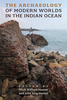
The Archaeology of Modern Worlds in the Indian Ocean is a collection of historical archaeological studies from various places around the Indian Ocean World. By bringing together specialists in Indian Ocean historical archaeology, the editors, Mark William Hauser and Julia Jong Haines, create space for us to see the long histories of connections, networks, exchanges, and globalization that have created the Indian Ocean World. They make a strong case for an Indian Ocean-centered historical archaeology of the region. This framework and the chapters that act as evidence for its effectiveness are presented as a corrective to the overrepresentation of the…
Full Review
February 3, 2025
David Pullins
Getty Museum Store, 2024.
208 pp.;
115 color ills.;
30 b/w ills.
Paperback
$60.00
(9781606068885)
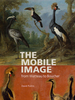
In The Mobile Image from Watteau to Boucher, art historian and curator David Pullins masterfully interrogates the status of the image as an object in eighteenth-century French art. Exploring a trove of “image-objects”—defined by the material status and site of a visual image rather than its subject—the author seeks to shift our focus from artistic reception to material production. Responding to sociohistorical interrogations pioneered by Thomas Crow; the materialistic turn espoused by the scholarship of Ewa Lajer-Burcharth; serious inquiries into the decorative arts led by Katie Scott; the market-driven analyses of the late Hans Van Miegroet; and the critical…
Full Review
January 27, 2025
Katie Hornstein
New Haven, CT:
Yale University Press, 2024.
272 pp.;
108 color ills.;
50 b/w ills.
Hardcover
$75.00
(9780300253207)
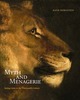
In this compellingly argued book, Myth and Menagerie: Seeing Lions in Nineteenth-Century France, Katie Hornstein offers a new paradigm for integrating art history with animal studies: rather than considering animal representation as a theoretical or visual construct, we are asked to “see” lions as individual personages with their own perspectives, histories, and names. Whether the encounter between nineteenth-century people and lions occurred in the context of zoos and other public menageries; on ships bound from colonial Algeria to France; in the “taming” theatrics of the circus; or in lion-themed paintings, drawings, prints, sculpture, and photographs, human and leonine life were…
Full Review
January 22, 2025
Sonal Khullar, ed.
Seattle:
University of Washington Press, 2023.
328 pp.;
129 color ills.
Hardcover
$75.00
(9780295751115)
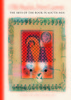
Old Stacks, New Leaves: The Arts of the Book in South Asia ingeniously reinvigorates the study of South Asia’s lesser-known book arts, transforming the reader’s experience into the rise and swell of artistic performance. With a unique editorial approach, the volume does much more than update Jeremiah Losty’s The Art of the Book in India (1982); it calls for active, reflexive engagement that unfolds like an event. This book is depicted in the volume through film, found object installation, and a variety of illustrated examples—book types crafted from palm leaf, paper, ink, paint, photo, and lithographic print—raising awareness of the…
Full Review
January 15, 2025
Load More