
- Chronology
- Before 1500 BCE
- 1500 BCE to 500 BCE
- 500 BCE to 500 CE
- Sixth to Tenth Century
- Eleventh to Fourteenth Century
- Fifteenth Century
- Sixteenth Century
- Seventeenth Century
- Eighteenth Century
- Nineteenth Century
- Twentieth Century
- Twenty-first Century
- Geographic Area
- Africa
- Caribbean
- Central America
- Central and North Asia
- East Asia
- North America
- Northern Europe
- Oceania/Australia
- South America
- South Asia/South East Asia
- Southern Europe and Mediterranean
- West Asia
- Subject, Genre, Media, Artistic Practice
- Aesthetics
- African American/African Diaspora
- Ancient Egyptian/Near Eastern Art
- Ancient Greek/Roman Art
- Architectural History/Urbanism/Historic Preservation
- Art Education/Pedagogy/Art Therapy
- Art of the Ancient Americas
- Artistic Practice/Creativity
- Asian American/Asian Diaspora
- Ceramics/Metals/Fiber Arts/Glass
- Colonial and Modern Latin America
- Comparative
- Conceptual Art
- Decorative Arts
- Design History
- Digital Media/New Media/Web-Based Media
- Digital Scholarship/History
- Drawings/Prints/Work on Paper/Artistc Practice
- Fiber Arts and Textiles
- Film/Video/Animation
- Folk Art/Vernacular Art
- Genders/Sexualities/Feminisms
- Graphic/Industrial/Object Design
- Indigenous Peoples
- Installation/Environmental Art
- Islamic Art
- Latinx
- Material Culture
- Multimedia/Intermedia
- Museum Practice/Museum Studies/Curatorial Studies/Arts Administration
- Native American/First Nations
- Painting
- Patronage, Art Collecting
- Performance Art/Performance Studies/Public Practice
- Photography
- Politics/Economics
- Queer/Gay Art
- Race/Ethnicity
- Religion/Cosmology/Spirituality
- Sculpture
- Sound Art
- Survey
- Theory/Historiography/Methodology
- Visual Studies
Browse Recent Book Reviews
Mary Patten
Chicago:
Half Letter Press, 2011.
84 pp.;
52 color ills.
Paper
$13.00
(9780981802312)
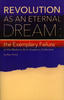
The book Revolution as an Eternal Dream: The Exemplary Failure of the Madame Binh Graphics Collective is a compelling first-person narrative by Mary Patten, one of the founding members of the radical art group Madam Binh Graphics Collective (MBGC) active in New York City from 1977–1983, and it makes a significant contribution to the history of feminist collectives and activist art practice more broadly. Patten does not limit her examination of MBGC to a diaristic account, however, but breaks the text into eleven brief parts, exploring the founding of the group, its philosophical and artistic sources, and concludes by considering…
Full Review
November 20, 2012
Anna Sigrídur Arnar
Chicago:
University of Chicago Press, 2011.
428 pp.;
12 color ills.;
112 b/w ills.
Cloth
$45.00
(9780226027012)
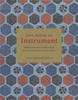
Bracingly original, Anna Sigrídur Arnar’s study positions Stéphane Mallarmé as a poet of engagement, for whom the book represented a critical instrument for social change. Contesting twentieth-century theorists who shape-shifted Mallarmé into a hermetic aesthete or a nihilist subversive, Arnar situates him within nineteenth-century debates about print culture and readership, and she views his conception of the book as an active response to the crises of fin-de-siècle France. Plotting her study around the poet’s Un coup de dés jamais n’abolira le hasard (A Throw of the Dice Will Never Abolish Chance), she approaches it from cross-linked historical and theoretical perspectives…
Full Review
November 20, 2012
James H. Rubin
Paris:
Flammarion, 2010.
416 pp.;
300 color ills.
Cloth
$125.00
(9782080301062)
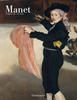
James H. Rubin’s newest book is a luxurious survey of Édouard Manet’s life and work, sumptuous in its three hundred color reproductions and lavish in its generous length of more than four hundred pages that allows the author to elaborate on his ideas about the artist. Intended for both the professional scholar and the non-specialist reader, Manet: Initial M, Hand and Eye traces the artist’s impact on his own generation and analyzes the variety of interpretations to which his art has been subjected up to the present day. Rubin decided not to focus exclusively on any one methodology, in order…
Full Review
November 20, 2012
Alexander Nagel
Chicago:
University of Chicago Press, 2011.
376 pp.;
60 color ills.;
100 b/w ills.
Cloth
$60.00
(9780226567723)
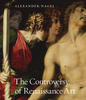
Alexander Nagel’s The Controversy of Renaissance Art is nothing if not ambitious. Winner of the College Art Association’s 2012 Charles Rufus Morey Book Award, it proposes no less than a reconfiguration of how we study the art of Italy from the first half of the sixteenth century. Italian High Renaissance art has certainly not been neglected in the discipline of art history, but Nagel opens his book with the observation that contesting “the centrality of the Renaissance in the history of art used to be a call arms. Now the battle is largely over” (1). Instead of seeking to recenter…
Full Review
November 16, 2012
Garry Neill Kennedy
Cambridge, MA:
MIT Press, 2012.
480 pp.;
191 color ills.;
410 b/w ills.
Cloth
$60.00
(9780262016902)
In 1972, Garry Neill Kennedy, then president of the Nova Scotia College of Art and Design (NSCAD) in Halifax, wrote a short text for a themed issue of Studio International focused on “aspects of art education.” Kennedy’s one-page description of NSCAD is a dense block of type that lists, among other things, basic physical and historical facts about the college and Canada; the names of the college’s students, faculty, staff, visiting artists, and administrators; and details of its finances as well as exhibition and publishing programs. He includes a range of playful data points: the total weight of the student…
Full Review
November 16, 2012
Patricia Junker
Exh. cat.
Seattle:
Seattle Art Museum in association with University of Washington Press, 2011.
72 pp.;
52 color ills.
Paper
$19.95
(9780295991245)
Exhibition schedule: Seattle Art Museum, Seattle, June 30–September 11, 2011
In 1863, Hudson River School landscape painter Albert Bierstadt embarked on an expedition to California and the Pacific Northwest. Influenced by the photographs of Carleton Watkins and accompanied by the journalist Fitz Hugh Ludlow, who chronicled the voyage for the New York Evening Post and the Atlantic Monthly, Bierstadt and his companion spent more than a month in the Yosemite Valley before traveling by steamboat, horseback, wagon, and rail into the new state of Oregon and through the Washington Territory. Seven years later, in his Manhattan studio, the artist produced a dramatic, large-scale painting of the western coastal scenery…
Full Review
November 16, 2012
Branden W. Joseph
Brooklyn, NY:
Zone Books, 2008.
480 pp.;
93 color ills.
Paper
$22.95
(9781890951870)
What conceptual, political, and artistic foundation stood behind Tony Conrad’s decision in 1965 to create The Flicker, an enervating, even mind-altering, real-time visual experience which would both contest and manifest a newly configured regime of power presiding over the contemporary subject? This is the question, and, in a sense, the pretext for Branden W. Joseph’s Beyond the Dream Syndicate: Tony Conrad and the Arts After Cage, a thoroughgoing revision of the artistic terrain of the 1960s and its historicization. Joseph’s sub-subtitle, “(A ‘Minor’ History),” itself bracketed and internally qualified with quotation marks, points to the author’s means: meticulous…
Full Review
November 13, 2012
Liz Wells
International Library of Cultural Studies, vol. 6..
London:
I. B. Tauris, 2011.
352 pp.;
88 color ills.
Cloth
$32.00
(9781845118648)
Liz Wells is best known for editing two of the most frequently used anthologies in courses devoted to the history and practice of photography: The Photography Reader (New York: Routledge, 2002) and Photography: A Critical Introduction (New York: Routledge, 2009). She is also a coeditor of the journal Photographies, launched in 2008, and has curated several exhibitions of contemporary landscape photography. Her first monographic publication, Land Matters: Landscape Photography, Culture and Identity collects six of Wells’s essays on photography’s intersection with landscape as both representation and lived experience.
Land Matters draws upon a lengthy catalogue of previous…
Full Review
November 13, 2012
Lauren S. Weingarden
Burlington, VT:
Ashgate, 2009.
456 pp.;
16 color ills.;
153 b/w ills.
Cloth
$124.95
(9780754663089)
Eager to ascertain the pure motives of and exact origins for modernism, early twentieth-century architectural scholarship left behind the untenable notion of architecture’s absolute departure from historic ideals as its practitioners moved resolutely toward a functionalist aesthetic. Historians of the past decade have attempted to correct such a narrow perspective by broadening their inquiry into the roots of modernism. Their expansion of the field of analysis to include nineteenth-century intellectual and visual culture as a whole has allowed modern architecture to emerge as a rich and complex phenomenon that transcended mere material and technical considerations.
Lauren S. Weingarden’s…
Full Review
October 24, 2012
John M. Rosenfield
Japanese Visual Culture Series, vol. 1..
Leiden:
Brill, 2010.
296 pp.;
197 ills.
Cloth
$132.00
(9789004168640)
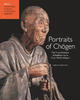
There are rare instances in which portraiture succeeds in conveying not only an individual’s personality, but also something greater, something like what John M. Rosenfield calls “the immediacy of life itself” (11). The striking portrait sculpture of the Japanese monk Shunjōbō Chōgen on the cover of Rosenfield’s Portraits of Chōgen: The Transformation of Buddhist Art in Early Medieval Japan meets these lofty standards. Produced around the time of its subject’s death in 1206, the work embodies the artistic transformation in Japan occurring over the last decades of the twelfth century and into the early thirteenth century, when the otherworldly idealism…
Full Review
October 24, 2012
Load More