
- Chronology
- Before 1500 BCE
- 1500 BCE to 500 BCE
- 500 BCE to 500 CE
- Sixth to Tenth Century
- Eleventh to Fourteenth Century
- Fifteenth Century
- Sixteenth Century
- Seventeenth Century
- Eighteenth Century
- Nineteenth Century
- Twentieth Century
- Twenty-first Century
- Geographic Area
- Africa
- Caribbean
- Central America
- Central and North Asia
- East Asia
- North America
- Northern Europe
- Oceania/Australia
- South America
- South Asia/South East Asia
- Southern Europe and Mediterranean
- West Asia
- Subject, Genre, Media, Artistic Practice
- Aesthetics
- African American/African Diaspora
- Ancient Egyptian/Near Eastern Art
- Ancient Greek/Roman Art
- Architectural History/Urbanism/Historic Preservation
- Art Education/Pedagogy/Art Therapy
- Art of the Ancient Americas
- Artistic Practice/Creativity
- Asian American/Asian Diaspora
- Ceramics/Metals/Fiber Arts/Glass
- Colonial and Modern Latin America
- Comparative
- Conceptual Art
- Decorative Arts
- Design History
- Digital Media/New Media/Web-Based Media
- Digital Scholarship/History
- Drawings/Prints/Work on Paper/Artistc Practice
- Fiber Arts and Textiles
- Film/Video/Animation
- Folk Art/Vernacular Art
- Genders/Sexualities/Feminisms
- Graphic/Industrial/Object Design
- Indigenous Peoples
- Installation/Environmental Art
- Islamic Art
- Latinx
- Material Culture
- Multimedia/Intermedia
- Museum Practice/Museum Studies/Curatorial Studies/Arts Administration
- Native American/First Nations
- Painting
- Patronage, Art Collecting
- Performance Art/Performance Studies/Public Practice
- Photography
- Politics/Economics
- Queer/Gay Art
- Race/Ethnicity
- Religion/Cosmology/Spirituality
- Sculpture
- Sound Art
- Survey
- Theory/Historiography/Methodology
- Visual Studies
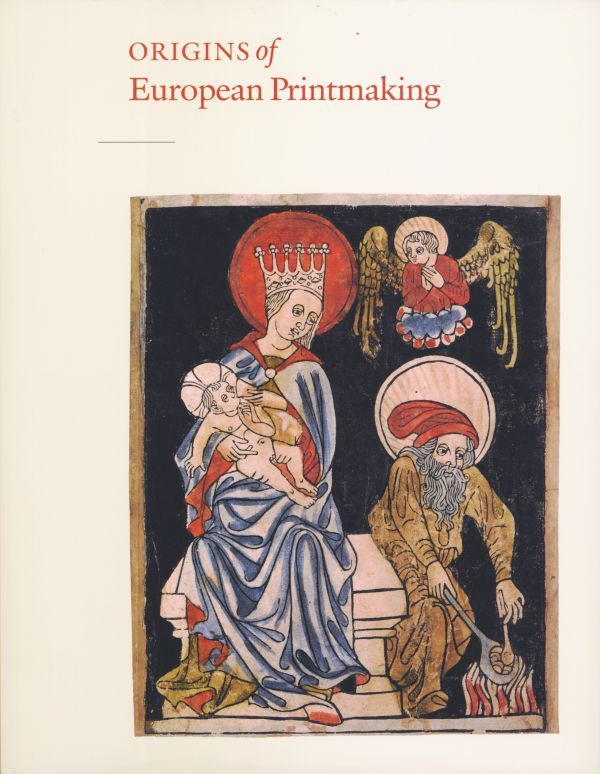
When Peter Parshall authored his standard work, The Renaissance Print, 1470–1550 (with David Landau; New Haven: Yale University Press, 1994), critical readers noted one significant omission: the earliest century of woodcuts before the generation of Albrecht Dürer. Perhaps it was because those works offered stark outlines and relatively little interior modeling, though they frequently were also colored to enhance their naturalism. Now the missing link has been forged. Drawing from extraordinary holdings of this material in their respective museums, Parshall and Schoch provide the first real study of early woodcuts since Arthur Hind in 1935 (though Richard Field, who contributes entries and an important essay to Origins of European Printmaking, catalogued the Washington works in 1965).
Visitors to the National Gallery will find many treats, including two large blocks, carved on both sides for additional printing (nos. 4–6). That first room also contains other relief impressions from molds and stamps (no. 1), including papier-mâché, clay, and tin. Often forgotten is how stamps fashion the surfaces of leather for book covers (no. 3). Even specialists will be fascinated by the range of technical variations: the complicated flock print, essentially a kind of velveted paper with incised contours (no. 11); paste prints, book decorations resembling goldsmith’s work (nos. 12, 51–52); and metalcuts, made with punches (nos. 10, 23, 46, 66–67, 83, 97). Printed images also appeared on cloth, forerunners of wallpaper, which simulated the more expensive medium of tapestry (no. 2) or even embroidery (no. 24). Finally, the wonderful gimmick of an added, movable piece on a pin permitted a rotating dial for determining Easter in different years (no. 54) but also a shifting image of two acrobatic monkeys on horseback (no. 63).
Though not a major preoccupation of the exhibition, dating and style change play a role in these early woodcuts. Particularly striking are religious images with lanky figures in heavy draperies with looping folds, which recall the massive stone carvings of Claus Sluter or the so-called Schöne Stil of South Germany, Austria, and Bohemia (cf., religious paintings by anonymous masters, notably the Master of Třebon) at the turn of the fifteenth century. Examples abound in the exhibition, most of them dated to a generation later, such as St. Dorothy and the Christ Child (1410–20; no. 27) and the richly colored Holy Family (ca. 1430; no. 29—the catalogue’s cover image), which remain highlights of the exhibition. Of course, this remarkable technical facility and figural elegance from the earliest years of the medium raise questions about relationships to both painters and wood carvers; in his catalogue entry for St. Dorothy and the Christ Child, Field also adduces another comparison, an Upper Austrian stained glass figure of a saint. These works make the viewer lament the loss of other prime examples of this early time and place (both still subject to revision). The other most ravishing image in both its form and its delicate coloring is a later work, Man of Sorrows with the Arma Christi (ca. 1465–80; no. 72).
Of course, many images offer religious scenes or individual figures, but still with rich variety. Some small colored images clearly were designed to be pasted into books as simulated miniatures (nos. 17–20, 50). Catalogue entries are sensitive to the transition of techniques and media from manuscript texts and miniatures to printed books with colored woodcuts—often in several stages and all possible permutations. Several examples of prints copying other prints (nos. 21–23) suggest both their dispersal and popularity. Some have remained in the sites where they were pasted, which sometimes serve as the entire basis of their preservation (no. 39 has an embroidered pouch and box container; no. 42 remains on the lid of its traveling case; no. 51, a girdle book from Nuremberg’s Kress family, retains its three paste prints). The functions of religious prints emerge from both their subjects and their inscriptions, such as the finely delineated Dutch Mass of St. Gregory (no. 75; produced like a blockbook with carved letters on the same block), which promised 14,000 years of indulgence for veneration with a contrite heart before the image. Varied images of the Crucifix appear in all sizes and shapes (no. 38 bears the arms of the monastery of Tegernsee), with prayers both handwritten and printed. Furthermore, the wounds of Christ, some of them purporting to be exact fractions of the actual size, sometimes serve as the isolated subject of devout meditation (nos. 49, 78). The Holy Face (nos. 70–71), the Man of Sorrows, or the suffering Christ (nos. 72–76) absorb frequent viewer empathy in these implements of late medieval piety. Many early woodcuts picture favorite saints (nos. 93–106), among whom St. Christopher (nos. 6, 10, 35, 37, 94) for travel and St. Sebastian for plague relief (26, 36, 96) reappear most often.
Perhaps the most fascinating prints conveyed concepts, whether religious or instructional, including memory images (no. 15 on the Gospel of Mark; no. 61, a human skeleton; no. 92, use of a hand as the “Mirror of Salvation”) as well as devotional processes (no. 85 on the new cult of the rosary; no. 89, Nine Ways of Prayer of St. Dominic; no. 90, Tower of Wisdom; no. 91, Way of Salvation). For information we can consult early maps (nos. 55–56), Nuremberg holy relics (no. 59), even counterfeit coin images (no. 61). Along with a horrific memorial of an alleged martyr, Simon of Trent, by local Jews according to a blood libel (dated 1475; no. 58), we also see one of the first political cartoons, an odd, grappling contest between contemporaries, Emperor Frederick III and Pope Paul II (no. 57).
Whether for their technical interests, distinctive pictorial appearances, spiritual purposes, or dissemination of information, these early woodcuts continue to fascinate. This comprehensive, well-displayed, fully researched exhibition re-establishes their significance, even as it allows them to exercise their charms for a modern audience.
Larry Silver
Farquhar Professor of History of Art, Department of the History of Art, University of Pennsylvania