
- Chronology
- Before 1500 BCE
- 1500 BCE to 500 BCE
- 500 BCE to 500 CE
- Sixth to Tenth Century
- Eleventh to Fourteenth Century
- Fifteenth Century
- Sixteenth Century
- Seventeenth Century
- Eighteenth Century
- Nineteenth Century
- Twentieth Century
- Twenty-first Century
- Geographic Area
- Africa
- Caribbean
- Central America
- Central and North Asia
- East Asia
- North America
- Northern Europe
- Oceania/Australia
- South America
- South Asia/South East Asia
- Southern Europe and Mediterranean
- West Asia
- Subject, Genre, Media, Artistic Practice
- Aesthetics
- African American/African Diaspora
- Ancient Egyptian/Near Eastern Art
- Ancient Greek/Roman Art
- Architectural History/Urbanism/Historic Preservation
- Art Education/Pedagogy/Art Therapy
- Art of the Ancient Americas
- Artistic Practice/Creativity
- Asian American/Asian Diaspora
- Ceramics/Metals/Fiber Arts/Glass
- Colonial and Modern Latin America
- Comparative
- Conceptual Art
- Decorative Arts
- Design History
- Digital Media/New Media/Web-Based Media
- Digital Scholarship/History
- Drawings/Prints/Work on Paper/Artistc Practice
- Fiber Arts and Textiles
- Film/Video/Animation
- Folk Art/Vernacular Art
- Genders/Sexualities/Feminisms
- Graphic/Industrial/Object Design
- Indigenous Peoples
- Installation/Environmental Art
- Islamic Art
- Latinx
- Material Culture
- Multimedia/Intermedia
- Museum Practice/Museum Studies/Curatorial Studies/Arts Administration
- Native American/First Nations
- Painting
- Patronage, Art Collecting
- Performance Art/Performance Studies/Public Practice
- Photography
- Politics/Economics
- Queer/Gay Art
- Race/Ethnicity
- Religion/Cosmology/Spirituality
- Sculpture
- Sound Art
- Survey
- Theory/Historiography/Methodology
- Visual Studies
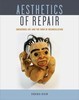
There are many intersecting contemporary art worlds. We are prone to miss some of the most vital aesthetic, cultural, and political functions of artists and their work when we train our eyes exclusively on the glittering circuit of global biennials and fairs. Here, the recontextualization of “outsiders” among the ranks of blue-chip artists, curators, and critics often eclipses the efficacy of art’s place-based affiliations. Eugenia Kisin’s book, Aesthetics of Repair: Indigenous Art and the Form of Reconciliation, builds a compelling picture of a globally networked regional Indigenous art world from within. The Northwest Coast of her study is long shaped by sovereign Indigenous relationships to other-than-human beings, land, and water. Anchored by Vancouver, British Columbia, as an artistic and economic nexus, the region is also defined by negotiation between Indigenous nations and the Canadian settler state over neoliberal forms of resource extraction and cultural commodification that reverberate planetarily.
Kisin’s study uses the Canadian Truth and Reconciliation Commission (TRC, 2008–2015), a nonjudicial national forum for reckoning with the violence perpetrated against generations of Indigenous people through church- and state-run residential schools, as a temporal demarcation. The Canadian TRC was the first of its kind to incorporate visual art as a mode of survivor testimony, as Kisin analyzes in the final stretches of the book. Building toward this important conclusion, the preceding chapters take up the teaching, making, and exhibiting of contemporary Indigenous Northwest Coast art “in the age of reconciliation” as a challenge to narratives of closure and resolution associated with the TRC. Thus, the “repair” of Kisin’s title is delivered as a question. Repair is defined as both an arrest of damage (closely aligned with another of her key terms, remediation) and restoration (if only partial) of a prior integrity. On the fault lines of settler-Indigenous relations, what sorts of reparative labor can and cannot be shared? When is it important to tend to the limits of repair? What roles might its refusal play in the pursuit of justice? One will not find easy answers, let alone recommendations, in this highly nuanced study of the ways in which repair is “lived and resisted” across the region.
The first two chapters tackle a dizzying scope of histories and themes, building from a compelling story of two entangled forms of return: the repatriation of a G’psgolox totem pole from the Museum of Ethnology in Stockholm to the Haisla Nation in Kitimat, British Columbia, and the simultaneous resurgence of the endangered oolichan, a small oily fish of tremendous cultural and ecological importance, in the Skeena River. This opening case study illuminates a fundamental tension between the art as a sacred and social actor, anchored in Indigenous Northwest Coast ontologies, and an understanding of art-as-resource generated within settler colonial systems of governance, religion, property, and welfare. In chapter one, Kisin turns to episodes in the evolution of a Northwest Coast art discourse since the 1920s that predict the continued tug-of-war between art defined as an inalienable being or a belonging versus an extractable resource.
Chapter two turns from historical underpinnings to methodological commitments. Kisin is a non-Indigenous scholar trained in anthropology. Here she engages in a self-reflexive inquiry into the possibilities for reparative collaboration between anthropologists and artists, drawing on her relationship with Wilp Laxgiik Nisga’a and Haida artist Luke Parnell. The chapter fills an important gap between disciplinary approaches by putting prominent contemporary art discourses about social practice in dialogue with debates about the form and ethics of anthropological fieldwork. In Indigenous art worlds, histories of dispossession and damage inflicted in the name of salvage ethnography continue to bear on contemporary encounters. Consequently, Kisin asserts that while the discourse of Northwest Coast art is irreducibly coproduced by settler and Indigenous agents, searching for any shared ground of collaboration “does and should feel tenuous and uncertain” (65).
Here and elsewhere in the book, a diffuse mode of theorizing seems to perform Kisin’s point about hesitancy. Interconnected lines of inquiry produce a dense mesh of ideas without necessarily building to clear arguments or summations. At turns throughout Aesthetics of Repair, I appreciated Kisin’s attention to experimental expression that bends prose into the shape of the inquiry. As components of the Northwest Coast art world she studies, research and writing bear significantly on the potential for repair. However, chapter two stood out to me for its difficulty, the gifts too few for the labor asked.
Next come three exciting chapters centered on case studies: respectively, the major traveling exhibition Beat Nation: Art, Hip Hop, and Aboriginal Culture (2012–14), organized by the Vancouver Art Gallery and curated by Kathleen Ritter and Tania Willard (Secwepemc); the Freda Diesing School of Northwest Coast Art in Terrace, British Columbia, where Parnell and Kisin cotaught a Native Northwest Coast art history course in 2013; and a work of political performance by artist Beau Dick, a citizen of ‘Namgis First Nation in British Columbia, staged on Parliament Hill in Ottawa in 2014. Each chapter pairs an institution, a form of creative knowledge production (exhibition, class, artwork), and a chorus of Indigenous artists and other agents shaping the Northwest Coast art world. The theoretical passages retain some of the difficulties mentioned above, but they are enlivened by vivid first-person narration and anchored by compelling readings of artworks, events, and texts.
At the risk of oversimplifying a complex intercultural analysis, I’ve attempted to identify the patterns in these chapters’ implicit approaches to repair. Generally, we are invited to see reparative potential in Indigenous community reclamations and protections of art and knowledge circulating on the Northwest Coast. In contrast, various forms of settler colonial institutional capture and discursive cooptation mark limits. In Kisin’s reading, Beat Nation manages to exceed the depoliticizing and primitivizing effects of museum display when energized by the unfolding of Idle No More, a pan-Indigenous movement protesting government treaty-breaking and environmental harms. Once on the move, the exhibition came to enact a method of visiting, inviting forms of trans-Indigenous gathering. Meanwhile, artists trained at Freda Diesing School face a choice between “starving and carving” by contributing to hard-won cultural continuity and care in their home communities, or practicing as urban artists in Vancouver, where economic and reputational benefits come with an intense bureaucratization of their labor. Finally, Dick refused a therapeutic discourse of healing during the TRC when he performed a breaking of copper in front of Parliament before a procession of Indigenous witnesses. The act drew on Northwest Coast potlach modalities to confer shame on the Canadian government for its culpability in perpetuating injustice, a form of return that Kisin finds particularly transformative.
These case studies prepare us, finally, for the must-read conclusion to the book, a sixth chapter and afterword that examine art as a form of survivor testimony during and after the TRC. Kisin looks across the flattening equivalencies and arrests of meaning that adhere in this framing. She considers how diverse forms of material culture—a bentwood box and the survivors’ belongings placed inside it, children’s art made inside residential schools—are animated and protected through the care practices of Indigenous community members and allied archivists. Repair happens, but often against the grain of the institutions that invite and celebrate it.
While Kisin clearly distinguishes between settler and Indigenous agencies in this fraught regional map of repair, she does not retreat into cultural purification or hardline moralization. These are real temptations in the current discourse about Indigenous art, which has taken a sharp turn from the transculturalism that animated scholarship in the 1990s and 2000s. Negotiations are dense and hybridized, allyships remain “tenuous and uncertain” (65), and triumphs are partial. This feels like an honest approach for any account of Indigenous art and knowledge unfolding under settler colonialism, however committed the narrator may be to the project of Indigenous cultural and political sovereignty. In turn, the Aesthetics of Repair: Indigenous Art and the Form of Reconciliation renders a regional art world of profound relevance to all places suffering from perpetual, systemic harms, where urgently needed mending can only take place “within and against present conditions” (169).
Jessica L. Horton
Professor, Department of Art History, University of Delaware