
- Chronology
- Before 1500 BCE
- 1500 BCE to 500 BCE
- 500 BCE to 500 CE
- Sixth to Tenth Century
- Eleventh to Fourteenth Century
- Fifteenth Century
- Sixteenth Century
- Seventeenth Century
- Eighteenth Century
- Nineteenth Century
- Twentieth Century
- Twenty-first Century
- Geographic Area
- Africa
- Caribbean
- Central America
- Central and North Asia
- East Asia
- North America
- Northern Europe
- Oceania/Australia
- South America
- South Asia/South East Asia
- Southern Europe and Mediterranean
- West Asia
- Subject, Genre, Media, Artistic Practice
- Aesthetics
- African American/African Diaspora
- Ancient Egyptian/Near Eastern Art
- Ancient Greek/Roman Art
- Architectural History/Urbanism/Historic Preservation
- Art Education/Pedagogy/Art Therapy
- Art of the Ancient Americas
- Artistic Practice/Creativity
- Asian American/Asian Diaspora
- Ceramics/Metals/Fiber Arts/Glass
- Colonial and Modern Latin America
- Comparative
- Conceptual Art
- Decorative Arts
- Design History
- Digital Media/New Media/Web-Based Media
- Digital Scholarship/History
- Drawings/Prints/Work on Paper/Artistc Practice
- Fiber Arts and Textiles
- Film/Video/Animation
- Folk Art/Vernacular Art
- Genders/Sexualities/Feminisms
- Graphic/Industrial/Object Design
- Indigenous Peoples
- Installation/Environmental Art
- Islamic Art
- Latinx
- Material Culture
- Multimedia/Intermedia
- Museum Practice/Museum Studies/Curatorial Studies/Arts Administration
- Native American/First Nations
- Painting
- Patronage, Art Collecting
- Performance Art/Performance Studies/Public Practice
- Photography
- Politics/Economics
- Queer/Gay Art
- Race/Ethnicity
- Religion/Cosmology/Spirituality
- Sculpture
- Sound Art
- Survey
- Theory/Historiography/Methodology
- Visual Studies
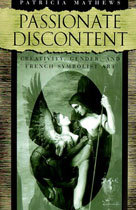
The Symbolist aesthetic in late nineteenth-century Europe demonstrates a particularly idiosyncratic complexity due to its interweaving of cultural, political, social, scientific, and aesthetic influences. Tracking these individual strands in the art and literature at the fin-de-siècle reveals a strong reaction against Enlightenment ideals of progress and rationalism that was often expressed in visual and verbal images of superstition and mysticism. During this period, subjective intuition replaced realist observation while suggestion was preferred to description for aesthetic effect. Compared to studies on Realism and Impressionism, those dedicated to Symbolism sometimes appear as slender and evasive as the effetely emaciated figures that frequently populate the visual and literary output of the practitioners of the movement. Benedict Nicholson once termed Symbolist art as “the other,” describing it as “the seamy side of the nineteenth century, a melancholy art of yearning for unattainable ideals” [Benedict Nicholson, “Sacred and Profane in Turin,” Burlington Magazine (October 1962): 641]. Patricia Mathews’s Passionate Discontent: Creativity, Gender, and French Symbolist Art tackles this problem of “the other” in its many-sided relationships between subject and style, gender and genre. She provides a convincing and insightful analysis of the Symbolist generation’s attitudes to the nature and gender of artistic identity, thereby crafting a monumental study out of issues that have often served as curio objects rather than underlying strategies that have been crucial to our understanding of artistic production and reception. Mathews’s location of the Symbolist aesthetic in the creative activity of the artist seeking to express a transcendental truth, rather than in a shared iconography of thematic props and topics, serves her purpose of foregrounding the elitist tactics of the movement’s practitioners to address themselves to an audience of privileged intellectuals. She skillfully demonstrates the Symbolist approach to history and tradition as reactionary and evolutionary rather than progressive and normative. By withdrawing from a society fragmented by rapacious consumerism and numbed by mass culture, the Symbolist aesthete sought consolation in a perception of the self as protected in a realm of individuality and creative freedom defined by genius and characterized by isolation. Mathews keenly exposes the complicity between the pose of physical distinction sought by the aesthete in flamboyant dress—whose purpose was to distinguish himself from the bourgeoisie—and his simultaneous dependence on consumer culture for the commodities necessary to sustain such a deliberately bizarre image. She is particularly good at discerning the contradictory ideological positions adopted by the Symbolists, such as disdaining official art education but at the same time relying on the skills acquired while training professionally. She demonstrates how race and culture influenced the Symbolists’ thinking while they simultaneously proclaimed the artist’s freedom from social milieu. The subtle alliances between conservative rhetoric and Symbolist isolation, and philosophical alienation and market capitalism, are deftly presented as dialogically interwoven. This results in an enriched view of a decade of Third Republican aesthetic politics that paraded itself as isolated from base materialist concerns, and at the same time that it fueled the engine of consumerism.
An examination of the nature and role of creativity during the Symbolist era involves competing discourses of science, medicine, literature, and art. Artistic inspiration and expression were diagnosed by medicine as madness at the same time they were prized as creative genius by the promoters of the Symbolist aesthetic. Mathews parallels the treatment of degeneracy in the medical literature of the time with the physical characteristics attributed to Symbolists seized by the mystical revelation and transcendental emotivity characteristic of their aesthetic. She traces the scientific relationship between deviancy and genius in her astute analysis of the writings of Cesare Lombroso, Max Nordau, Henri Joly, and Dr. J. Moreau de Tours by analyzing the role of evolutionary theory, heredity, and physiological determination. Symbolist writers on genius and its relation to madness justified their ideas by appealing to Romantic models of enlightened marginality. They transposed madness from being viewed as a debilitating disease to one of a state of inspired revelation and a privileged condition. A power struggle simmered beneath the surface of this debate and Mathews perceptively illustrates how authoritative discourses were constructed to establish a norm against which prostitution, homosexuality, and female liberation were coded as diseased and sinful and thus needing surveillance and control. Her thorough investigation of the intricacies of the debate on genius and degeneracy sets the stage for the core of her thesis that demonstrates the gendered discourse on creativity.
Scientific writers and Symbolist aestheticians disagreed on the causes and manifestations of genius, but closed ranks with each other over the issue of its exclusive expression in masculinity. Productivity for women was circumscribed to the domestic sphere, their creativity manifested, like the ancient Cornelia’s jewels, in their offspring. Male douleur—that quality so prized by Charles Baudelaire in Eugène Delacroix’s art—could effectively be translated into creative output. Woman’s “passionate discontent,” however, had no similar trajectory. Like menstrual cramps, it seems, this female malady had to be endured as it could never transcend to the culturally superior realm of artistic production. Mathews parallels the Symbolist stages of the creative process with Dr. Jean-Martin Charcot’s medical description of hysteria, demonstrating the fluidity of the shared vocabulary between an allegedly objective science and a personalized aesthetic. Van Gogh’s madness became a prized attribute of his artistic genius and his heroic persona is inextricably entwined with his work, serving still as a powerful public draw to museum retrospectives of his work. As Mathews ably argues, Camille Claudel’s mental instability had several cogent circumstances behind it. Yet the insanity imputed to Claudel never advanced her work in similar ways. Rather than being seen as valorous, her work has largely been marginalized in history, and one would seek in vain for tote bags and coffee mugs carrying an insignia of her profoundly expressive art.
Mathews investigates images of the femme fatale, the innocent woman, and the androgyne in Symbolist art to reveal the manipulations coded into their cultural personifications. The femme fatale, one of the stock figures of Symbolist art, has often been interpreted in terms of a rapacious Freudian castration anxiety. Mathews’s perceptive insight—this depiction allows a masculine consumer of the image to construct an in-control, superior self while simultaneously relishing his vicarious sexual consumption—goes far to advance an enriched view of the complexities of gender construction during a period when declining birth rates and struggles for emancipation made women feared and in need of containment. She reads the portrayal of the androgyne’s denial of sexual difference as countering some feminists’ avowal of evolutionary superiority at the same time that it assuaged male fears roused by perceived threats to their manhood. Mathews’s handling of this material is as impressive as it is original, adding depth of interpretation to familiar paintings while bringing lesser-known ones to the fore in her discriminating analyses. Focusing on the critical gulf existing between the discourses on woman and creativity, Mathews substantiates her analyses by investigating the reception of Claudel’s work. The terms “male” and “genius” were so inextricably linked that Symbolist critics could only gasp in astonishment at the conceptual strength and execution of her sculpture. Caught between their admiration of her work and their inability to define her exceptional gifts as female, critics struggled to place her work into a category that fit neither the heroic achievement of the masculine nor the traditional confines of the femme-artiste’s domestic subject matter or capriciously sensual style. Combining intellect and sexuality proved too anomalous for most writers on her art, despite their genuine enthusiasm for her work. By linking Claudel to Rodin—promoting her work as a kind of reduced broth drawn off of the hearty stew of the master—critics reinforced the gender boundaries held in place by the culture of the time. Mathews deconstructs this myth by her comparison of Claudel’s sculpted Wave with painted images by Gauguin and Aristide Maillol, demonstrating the agency of Claudel’s figures against the decorative passivity of those portrayed by the male artists. Works by Elisabeth Sourel and Jeanne Jaquemin also strengthen Mathews’s case for a Symbolist feminist aesthetic that draws upon experience rather than biology for its expression. Gauguin’s paintings of earthly Tahitian paradise, populated with noble savages, assuaged his masculine desire for cultural superiority and sexual satisfaction with its primitive Eves and homoerotic males. Mathews situates Gauguin’s imagery within the double standard established by the artist’s attitude of Western rationality and his portrayal of intuitively innocent Tahitians. Her investigation of Gauguin’s complex reaction to notions of sexual freedom in Tahiti clashing with Western moral sanctions enriches the reading of his exotic and sensual imagery. A final chapter on Suzanne Valadon positions her painting within the Symbolist aesthetic, showing how she adapted it to her own pictorial needs. Critics were confounded by the lower-class connotations of her female nudes, and often more intrigued by her bohemian life than her skillful canvases. Mathews proves through her articulate analysis of the reception of Valadon’s work that these images could only be seen in terms of a masculine achievement that fit within the discourse constructed around woman as nature.
This excellent book opens up a wide realm of inquiry and a wealth of ideas into Symbolist history and aesthetics in ways that will undoubtedly nourish and stimulate future studies.
Therese Dolan
Professor, Department of Art History, Tyler School of Art, Temple University