
- Chronology
- Before 1500 BCE
- 1500 BCE to 500 BCE
- 500 BCE to 500 CE
- Sixth to Tenth Century
- Eleventh to Fourteenth Century
- Fifteenth Century
- Sixteenth Century
- Seventeenth Century
- Eighteenth Century
- Nineteenth Century
- Twentieth Century
- Twenty-first Century
- Geographic Area
- Africa
- Caribbean
- Central America
- Central and North Asia
- East Asia
- North America
- Northern Europe
- Oceania/Australia
- South America
- South Asia/South East Asia
- Southern Europe and Mediterranean
- West Asia
- Subject, Genre, Media, Artistic Practice
- Aesthetics
- African American/African Diaspora
- Ancient Egyptian/Near Eastern Art
- Ancient Greek/Roman Art
- Architectural History/Urbanism/Historic Preservation
- Art Education/Pedagogy/Art Therapy
- Art of the Ancient Americas
- Artistic Practice/Creativity
- Asian American/Asian Diaspora
- Ceramics/Metals/Fiber Arts/Glass
- Colonial and Modern Latin America
- Comparative
- Conceptual Art
- Decorative Arts
- Design History
- Digital Media/New Media/Web-Based Media
- Digital Scholarship/History
- Drawings/Prints/Work on Paper/Artistc Practice
- Fiber Arts and Textiles
- Film/Video/Animation
- Folk Art/Vernacular Art
- Genders/Sexualities/Feminisms
- Graphic/Industrial/Object Design
- Indigenous Peoples
- Installation/Environmental Art
- Islamic Art
- Latinx
- Material Culture
- Multimedia/Intermedia
- Museum Practice/Museum Studies/Curatorial Studies/Arts Administration
- Native American/First Nations
- Painting
- Patronage, Art Collecting
- Performance Art/Performance Studies/Public Practice
- Photography
- Politics/Economics
- Queer/Gay Art
- Race/Ethnicity
- Religion/Cosmology/Spirituality
- Sculpture
- Sound Art
- Survey
- Theory/Historiography/Methodology
- Visual Studies
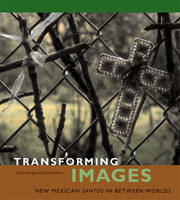
Some of the most recognizable regional art forms in the United States today are New Mexican santos. These religious devotional objects include retablos (painted wood panels) and bultos (polychromed three-dimensional sculpture), and they originated in the Hispanic colonial period of New Mexico (late sixteenth–early nineteenth century). Their fabrication has continued into the twenty-first century, coinciding with a renewed interest in these objects. Numerous publications and exhibitions appearing since the early twentieth century attest to the popularity of santos, yet an understanding of them has plateaued in recent decades. Scholars have primarily focused on the santeros, or creators of santos, attempting to identify the styles developed by individual santeros and to attribute certain objects to their respective oeuvres. Frequently ignored, however, are the possible indigenous contributions to the creation of santos, as well as the social function, reception, and possible meanings that these images elicited in their historical contexts.
In Transforming Images: New Mexican Santos in-between Worlds, editors Claire Farago and Donna Pierce offer a welcome and long-overdue study of New Mexican santos that concentrates on issues typically neglected. Similar to Farago’s previous edited volume, Reframing the Renaissance: Visual Culture in Europe and Latin America, 1450–1650 (New Haven: Yale University Press, 1995), Transforming Images approaches its topic from a variety of interdisciplinary perspectives and shifts discussions of santos from style, attribution, and authorship to cultural interaction, hybridity, and reception. The book’s title aptly connotes the work’s concerns by referring to Homi Bhabha’s idea that “in-between” spaces, or spaces created in the process of articulating cultural differences, function as sites of collaboration and resistance (Homi Bhabha, The Location of Culture, London: Routledge, 1994). In addition, the book’s opening epigraphs cite postmodern theorists like Jacques Derrida, Michel de Certeau, bell hooks, and Bhabha, all thinkers who have questioned, in some fashion, the stability of meaning and categorization, as well as the creation of power relations and hegemonic ideologies. As is clear from its beginning, then, this book deals not only with style and connoisseurship, authorship and oeuvre, but also with the “social function of the images” (6) and the multivalency, performance, and construction of meaning for the heterogeneous society of New Mexico. Unfortunately, this review will not allow me to discuss everything mentioned in Transforming Images, so I will highlight only certain themes, bypassing specific comment on each contribution. I should note, too, that some of the book’s most interesting and accessible material appears in the interleaf sections and extended captions.
Although the volume contains essays from scholars in fields as diverse as art history, genetics, and music, several general points apply to all the essays. First, each author attempts to bridge “new theoretical perspectives and research strategies” with the investigation of New Mexican santos and the specific historical and social context of the objects’ production and reception (2). Second, the authors use santos to question the underpinnings of art history. Third, they argue that New Mexican santos had and continue to have significance for diverse audiences and makers (although their significance has shifted over time). In addition, each essay broaches issues of authenticity, cultural interaction and exchange, the indigenous presence in New Mexico, and identity politics and subject formation. Most authors display an acute sensitivity to the politics of language, questioning and complicating terms most people take for granted, such as “style” and “ethnicity.” For example, Farago, in her introduction, reexamines the term “style,” highlighting its inadequacy in determining anything essential to a person, place, or period. As a term linked indefatigably to connoisseurship, which has been a primary focus of studies of New Mexican santos, Farago addresses the word’s biases and assumptions.
Following Farago’s provocative introduction, the volume is divided into four sections. The first two sections outline the methodological and theoretical framework for the study. Furthermore, by relying heavily on archival documents, they demonstrate the complex exchange and interaction, whether material, cultural, or genetic, that occurred in New Mexico. In “The Dynamic Ethnicity of the People of Spanish Colonial New Mexico in the Eighteenth Century,” Paul Kraemer, in particular, highlights the complex demographic of New Mexico, referring to data found in archival materials like a 1680 muster roll from the El Paso area and a 1750 census. He successfully complicates previous attempts to label ethnicity in colonial New Mexico, as does José Antonio Esquibel in “The Formative Era for New Mexico’s Colonial Population: 1693–1700.” An exciting chapter by Farago offers an extended discussion of the semiotics of New Mexican santos, bringing the author’s vast knowledge of contemporary postmodern and postcolonial theory into play. She claims that, prior to this volume, scholars ignored the “different social construct[s] of the visual sign” (28; emphasis in original) in New Mexican santos. She provides several compelling examples to support her claim, such as her identification in certain retablos of possible local flora that signified a variety of meanings: a visual sign that appears as a lily to denote purity when coupled with a saint also resembles a local bellflower associated with healing among Pueblo peoples. Donna Pierce and Cordelia Thomas Snow’s chapter serves as a model for other scholars considering objects that no longer exist, but that are colorfully described in archival sources. While this section is not focused on santos, it sets the stage for discussing these objects within a new contextual and methodological framework by reassessing previous archival and archaeological evidence presented in the scholarship focused on New Mexico. The book’s concluding chapter too, another by Farago, reaches far beyond issues of investigating New Mexican santos. Farago provocatively considers the ethics of scholarship through a discussion of Aby Warburg and his research on the Pueblo Indians of New Mexico in the late nineteenth century. She should be commended for dealing with issues of scholarly responsibility, intellectual property, and cultural values, since art historians infrequently discuss such matters. As she poignantly notes, “Ethnocentric attitudes toward outsiders originate on both sides of the cultural divide” (272).
The two last sections focus primarily on santos both in the colonial period and in the late nineteenth and the twentieth century. Farago, while exploring the visual ties between the Pueblo katsinas and the Catholic santos posits some noteworthy ideas on the signifying potential of landscape elements in santos, specifically retablos. How objects make the leap from functioning tools, in this case devotional icons, to collectible “art” is touched upon by several authors (Farago, Thomas Riedel, Robin Farwell Gavin, Dinah Zeiger). Of particular importance is Gavin’s investigation of the geographic biases of earlier scholarship, which included only northern New Mexican santos from the Río Arriba region (north of Santa Fe) in discussions of these objects. She supplies important examples of santos from the Río Abajo region (south of Santa Fe), thereby highlighting some of the attribution problems in scholarship on santos.
Overall, the volume and its authors display an impressive breadth and thoroughness of research. The book itself contains a remarkable quality of images, many of which are in color. Furthermore, anyone searching for more details on santos will be delighted to find the exhaustive endnotes and twenty-four page consolidated bibliography. Several shortcomings, however, are apparent. First of all, the chapters display an unequal amount of theoretical rigor; this creates a disjointed flow throughout the whole text. While a certain degree of theoretical savvy needs to be brought to discussions of New Mexican art, the exciting ideas are occasionally lost amid theoretical digressions. In addition, repetition sporadically occurs, particularly in the beginning. Whether this was intentional or the result of the book’s ten-year publication process, I cannot say. These few criticisms aside, with this intellectually rigorous volume in hand, readers will gain a sound understanding of the complexities and challenges accompanying the study of these devotional objects. Moreover, they will acquire a broad, detailed introduction to important issues in contemporary art-historical scholarship: theoretical, methodological, and ethical. Transforming Images will no doubt be a catalyst for a new and exciting era of santos scholarship.
Lauren G. Kilroy-Ewbank
Associate Professor of Art History, Pepperdine University